
Sleeping pods, women-only housing and street outreach are in a £1.7m Worcester plan up for a vote on 4 November. 27 people slept rough at the last count.
Worcester City Council wants to buy sleeping pods for people who have slept rough for months and cannot use other accommodation. The pods are one of seven projects councillors are asked to approve on Wednesday 4 November. The others include women-only housing and a team that goes out to find people on the street.
All of it is paid for by government grants worth £1,701,337 over three years. The council says none of it falls on its own budget. (Rough Sleeping Programme, report to Communities Committee, Worcester City Council, 4 November 2026)
The vote comes as the number of people sleeping rough in the city rises. On the last night of September, 27 people were counted sleeping rough in Worcester. The council’s target is 15.
What the council wants to fund
The report asks the Communities Committee to approve these projects, delivered through grants to local organisations or by commissioning services:
- Pods: short-term, off-the-street accommodation giving “an immediate safe place” for long-term rough sleepers who face barriers to other housing. This is the only item paid from capital money.
- Women-only accommodation: officers will “explore options” for a safe, dedicated space for women sleeping rough.
- Supported accommodation: exclusive use of a building for long-term rough sleepers with complex needs, with trauma-informed support and security on site.
- Assertive outreach: a team that actively finds people on the street and builds trust, “rather than waiting for them to visit a clinic, office or service”.
- A rough sleeping social worker and assistant working directly with people on the street.
- Mental health outreach: possible expansion of the NHS Bright Path programme. One officer currently covers all of Worcestershire.
- More places in existing accommodation in the city for people the council refers.
The report puts no figure on any single project and gives no number or location for the pods. It says the projects “are currently under development, are subject to further discussion and negotiation and therefore may be subject to change”.
Two things have already started. The council has recruited extra rough sleeper support officers. It is also paying for Maggs Day Centre to open on Saturdays and Sundays, so direct support is now available seven days a week. The report names St Paul’s Hostel, Maggs, Smartlets (part of Citizens Advice) and Caring for Communities and People among the partners officers have talked to.
Where the £1.7m comes from
The total combines two government grants.
| Grant | 2026-27 | 2027-28 | 2028-29 | Total |
|---|---|---|---|---|
| Rough Sleeping Programme | £251,038 | £464,974 | £610,325 | £1,326,337 |
| Long-Term Rough Sleeping Innovation Programme | £125,000 | £125,000 | £125,000 | £375,000 |
| Total | £376,038 | £589,974 | £735,325 | £1,701,337 |
The Rough Sleeping Programme money includes £594,320 of capital in the second and third years. Worcester is the only district in Worcestershire to get capital from it, the report says. We covered that award in September: only the first year is confirmed, and the government can cut or claw back later years if the money is not used as intended.
The innovation grant went to a small number of areas picked by the government because of the share of people sleeping rough long-term.
How many people sleep rough in Worcester
The council’s latest performance report gives the counts. (Quarters 1 and 2 Performance Report 2026-27, Appendix 4: homelessness and rough sleeping, Worcester City Council)
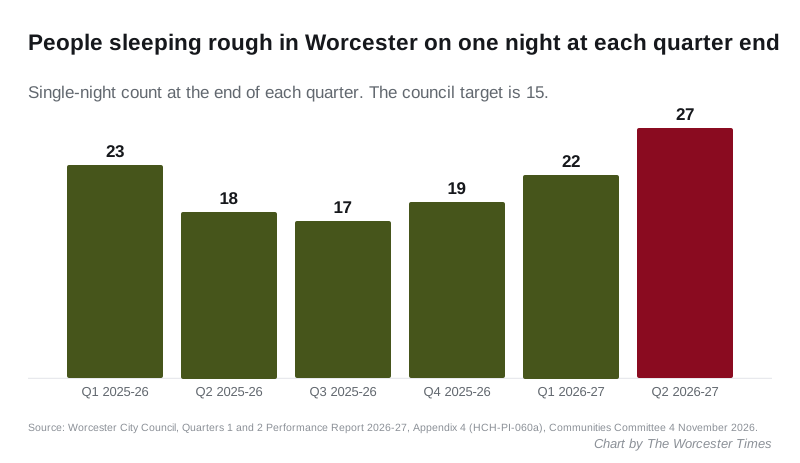
- 27 people were sleeping rough on the last night of September: 21 men and 6 women. That is up from 22 at the end of June and 18 a year earlier.
- 18 people were new to the streets between July and September, against 6 in the previous three months.
- 6 of the 27 were from outside the area, and 2 had settled accommodation.
- 20 people were sleeping rough long-term at the end of September, meaning they had been seen sleeping rough in three or more of the last 12 months.
Worcester stands out against similar councils. In the national autumn 2025 snapshot, Worcester counted 31 people sleeping rough. The average for the 15 similar councils it is measured against was 11. Only Exeter, at 51, was higher. Gloucester counted 24.
The report says rough sleeping is affected by “the draw from a concentration of homelessness services” in the city, rising housing costs and more complex needs. It says the biggest gap is supported accommodation for people with high support needs.
The target: five or fewer by 2029
Alongside the projects, councillors are asked to note a draft Long-Term Rough Sleeping Partnership Plan, drawn up with health, police, probation and charity partners. (Appendix 1: Draft Long-Term Rough Sleeping Partnership Plan 2026-2029, Worcester City Council)
It sets a target of no more than five people sleeping rough long-term by 31 March 2029. The baseline was 11 in November 2025. Long-term rough sleepers made up 54.6% of everyone sleeping rough in the city on average in 2025-26, and over 70% in September 2025.
The plan also commits partners to making sure nobody leaving prison, hospital or care is discharged onto the street.
What happens next
- 4 November, 7pm: Communities Committee decides whether to approve the projects. (Agenda, Worcester City Council)
- 17 November: the partnership plan goes to the Health and Wellbeing Board.
- 25 November: it goes to the Safeguarding Adults Board.
- By 1 December: the council must publish an action plan and send it to the government.
- January 2027: a new homelessness and rough sleeping strategy comes to the committee.
Once approved, contracts and grants would be signed off by the interim corporate director of housing with the committee’s chair and vice chair.
What it means for you
If you see someone sleeping rough in Worcester, you can tell the council’s outreach team through StreetLink, which passes the location on. Anyone worried about losing their home can contact the council’s housing options team before it reaches crisis point: the report’s whole emphasis is on stepping in earlier.
The pods and women-only housing are proposals, not projects with a site, size or opening date. Even if councillors approve them, the report says the details may change. We will report what the committee decides, and where the pods would go once the council says.
Have your say