
Worcester's £1.3m rough sleeping award is £251,038 this year. The other £1,075,299 is provisional, and the city holds every pound of capital in Worcestershire.
Worcester City Council has been given £1,326,337 over three years to get people off the streets. Only £251,038 of it is confirmed. The rest depends on how the council spends this winter’s share.
The council announced the money on 17 September, describing it as “a funding boost of £1.3 million over three years”. (Council receives extra funding to tackle homelessness, Worcester City Council, 17 September 2026) The figure behind it is in the government’s own allocation table, published on 19 August, and it is more specific than the headline. (Rough Sleeping Programme: funding allocations, Ministry of Housing, Communities and Local Government, 19 August 2026)
What Worcester actually gets, and when
- 2026-27: £251,038. Revenue only, confirmed, paid by October as a ringfenced Section 31 grant.
- 2027-28: £464,974. £227,748 revenue and £237,226 capital. Provisional.
- 2028-29: £610,325. £253,231 revenue and £357,094 capital. Provisional.
So £1,075,299 of the £1.3m, about four fifths of it, is not yet secure. The guidance is blunt about that: “Funding allocations for 2027 to 2028 and 2028 to 2029 are provisional. MHCLG may reduce or withhold future payments if 2026 to 2027 funding is not used in support of these programme objectives.” (Rough Sleeping Programme Guidance, MHCLG, 19 August 2026)
The later years also come with a condition the press release does not mention. Before the settled accommodation money is released, the council has to send MHCLG a delivery plan setting out the scale of what it will build or buy, how it will do it and what support it will wrap around it. Anything left unspent “may be subject to clawback”.
The deadline is Christmas
The first year’s money is for what the programme calls a “route off the street”. The target date is not vague. The guidance says the immediate priority is “to move as many people as possible off the street and into accommodation before Christmas this year (2026)”.
That gives the council roughly three months from the point the grant lands. The money can pay for accommodation, outreach, mental health and substance misuse access, benefits help and tenancy support. It cannot be used for general temporary accommodation, ordinary social housing, or anything that “simply displaces existing rough sleeping support”.
Worcester holds every pound of capital in the county
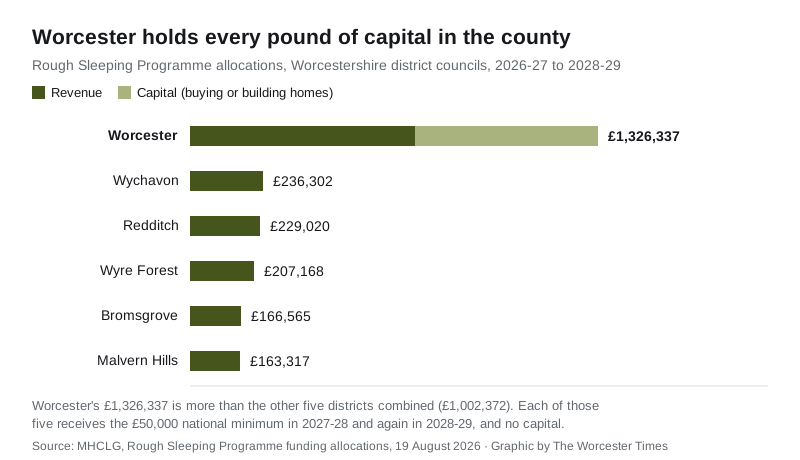
Worcestershire’s six district councils were all given something. Only Worcester was given money to buy, repair or build anything.
| Council | Revenue | Capital | Total |
|---|---|---|---|
| Worcester | £732,017 | £594,320 | £1,326,337 |
| Wychavon | £236,302 | £0 | £236,302 |
| Redditch | £229,020 | £0 | £229,020 |
| Wyre Forest | £207,168 | £0 | £207,168 |
| Bromsgrove | £166,565 | £0 | £166,565 |
| Malvern Hills | £163,317 | £0 | £163,317 |
Worcester’s share is larger than the other five put together, which come to £1,002,372 between them. Each of those five gets the £50,000 minimum in 2027-28 and again in 2028-29, the floor the government set for any council with at least two people sleeping rough on a 12-month average.
Nationally, Worcester is 35th of the 187 councils named in the table, and one of only 74 given any capital at all.
How many people this is about
The council’s release does not say how many people sleep rough in Worcester. The government’s own monthly count does.
In June 2026, the most recent month published, 27 people were seen sleeping rough in Worcester across the month. Seventeen of them were long-term rough sleepers, the highest that measure has been since October 2025. Sixteen spent more than ten nights out during the month. (Rough sleeping data framework, April to June 2026, MHCLG, 27 August 2026)
Over the 12 months to June 2026 the average was 25.5 people a month. That is the eighth highest of the 30 local authorities in the West Midlands, above Herefordshire and Shropshire and behind Stoke-on-Trent, Birmingham, Coventry, Sandwell, Wolverhampton, Solihull and Walsall. Every one of those is a city or a metropolitan borough.
The annual single-night snapshot tells the same story. On one night in autumn 2025, 31 people were counted sleeping rough in Worcester, up from 24 a year earlier and the highest figure recorded in the city since 2012. (Rough sleeping snapshot in England: autumn 2025, MHCLG)
A second grant the council did not put a number on
The release adds that the money is “in addition to funding through the Government’s Long Term Rough Sleeper Innovation Programme”. It does not say how much.
That programme gives Worcester £125,000 a year for three years, £375,000 in total. Worcester is one of only 27 councils in England on the list, alongside the Greater London Authority, and one of only six district councils on it. The others are Breckland, Cambridge, Canterbury, Great Yarmouth and Preston. Everything else on the list is a city, a unitary or a metropolitan borough. (Long-Term Rough Sleeping Innovation Programme: local authority allocations, MHCLG, 26 February 2026)
Taken together the two programmes are worth just over £1.7m to Worcester by March 2029.
There is also cold weather money already in place. In March the county council confirmed £100,000 of public health funding for 2026-27 to help all six districts run the Severe Weather Emergency Protocol. That opens for five nights over Christmas regardless of the forecast, as well as when temperatures are due to hit freezing. (Funding boost to support rough sleepers across Worcestershire, Worcestershire County Council, 18 March 2026)
What the council says
Councillor Lynn Denham, Leader of Worcester City Council, said tackling homelessness and rough sleeping is “an absolute priority for the City Council and the dedicated network of partners who work closely with us”.
She added: “The issues of homelessness and rough sleeping are not just about housing, and they are not challenges that the City Council can solve alone.”
What it means for you
The practical test of this grant is visible on the street, and it has a date on it. If the number of people sleeping rough in Worcester has not fallen by the new year, the first year of the programme has not worked as intended.
Watch for three things:
- Whether the council publishes a delivery plan. The 2027-28 and 2028-29 money, including all £594,320 of capital, is not released until MHCLG has one.
- Where the capital goes. It can only be spent on acquiring, repairing, refurbishing or building homes, with a minimum ten-year lease where the council leases rather than buys. The first new homes are expected from 2027-28. The grant is also set at a rate that assumes a local contribution funded from rental income, so the £594,320 will not cover the full cost on its own and the council has to say where the rest comes from.
- The monthly figures. MHCLG says it will monitor year one using the Rough Sleeping Data Framework, the same published count quoted above, so anyone can check the same numbers the department will.
If you are worried about someone sleeping rough in Worcester, you can report it through StreetLink, the national referral service, which passes the details to the local outreach team. (StreetLink)
For the money side of the city council’s budget, see our guides to Worcester council tax bands and Worcester planning news.
Sources: Rough Sleeping Programme funding allocations and guidance, MHCLG, 19 August 2026; Long-Term Rough Sleeping Innovation Programme allocations, MHCLG, 26 February 2026; Tables on rough sleeping, MHCLG; Worcester City Council news, 17 September 2026; Worcestershire County Council news, 18 March 2026.
Have your say