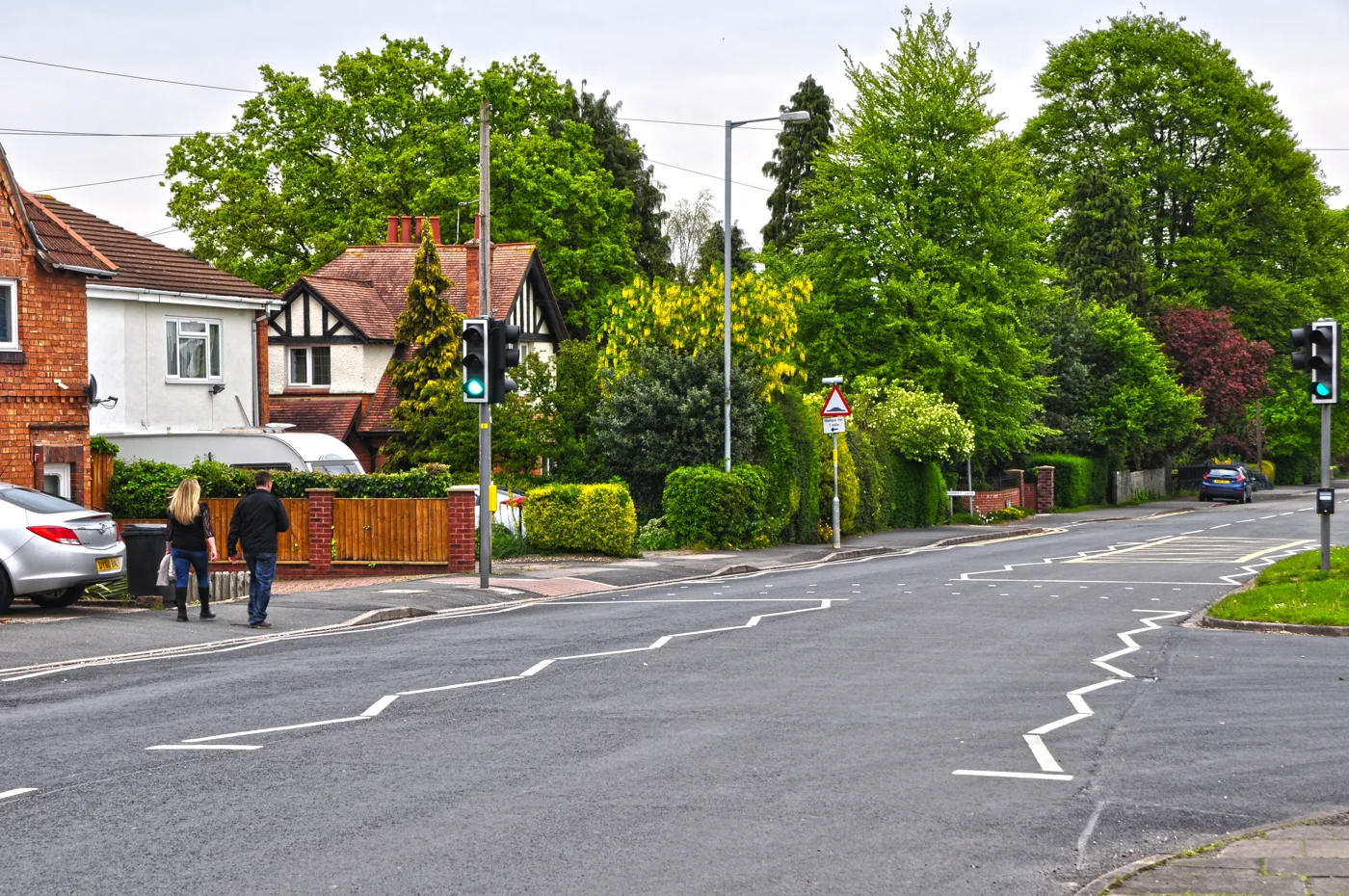
Six new classrooms and 36 toilet cubicles were approved on 13 August under 26/00070/FUL. The college has 1,800 students and a consented cap of 2,020.
Worcester City Council has approved a four-storey extension at Worcester Sixth Form College on Spetchley Road. The decision was made on 13 August 2026 under reference 26/00070/FUL. It was taken by officers under delegated powers, so it never went to a planning committee.
The scheme demolishes a single-storey building in the college courtyard and replaces it with about 770 sq m of internal floor area across four floors.
What the extension adds
The council’s delegated decision report records that the scheme would:
- replace two substandard classrooms and create four new ones
- add roughly 120 sq m of flexible teaching space
- provide 36 new unisex toilet cubicles
- add social and breakout space
- rebuild what the report calls a “dysfunctional and substandard kitchen servery and dining hall”
The college’s own planning agent describes it as six new classrooms. Both figures describe the same building. Six classrooms are built, two existing ones are replaced, so the net gain is four. (Worcester City Council, delegated decision report, 26/00070/FUL)
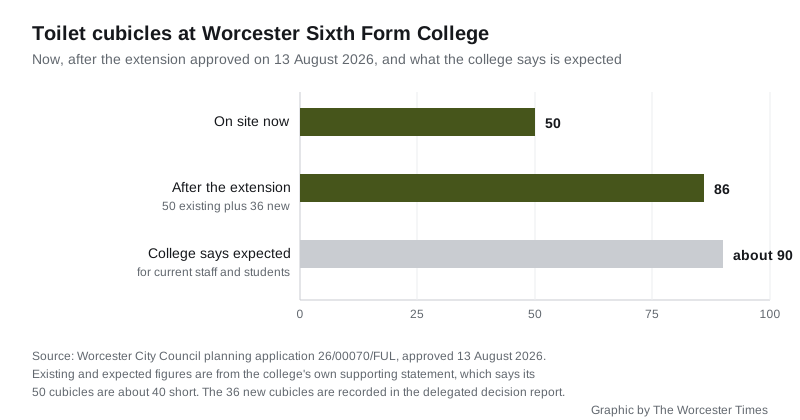
On toilets the arithmetic is straightforward. The college has 50 cubicles now. Adding 36 takes it to 86, just short of the roughly 90 it says would be expected for its current numbers of staff and students.
The college says it is full
The reason for the build is set out in a supporting statement the college submitted with the application. It is unusually blunt about the state of the site.
The college says it has 1,800 students, which it puts at more than 20% of all 16 to 19 year olds in education in Worcestershire. It enrols about 1,000 students a year.
Its other figures:
- the college has grown 31% over the last six years, against cohort growth of 8%
- utilisation surveys show room usage “close to 100%”
- there are 50 toilet cubicles on site, which the college says is about 40 short of what would be expected for the number of staff and students
- lunch is split into two sittings to manage overcrowded social space, a measure the college says “staff and students dislike”
The main buildings date from the 1960s. The college’s last major addition was a science extension finished in 2023.
The college also argues that demand will keep rising, citing a 10% increase in the Worcestershire demographic by 2030 and 40,000 houses planned near the site. Those are the college’s own projections, not council figures.
The student cap has not changed
This matters for anyone worried about traffic. The extension does not raise the number of students the college is allowed to teach.
Worcestershire County Council, as highway authority, recorded that the maximum number of students on roll will be 2,020, “with no intention to go beyond this consented figure”. The college currently has 1,800. The highway authority concluded the work is aimed at fixing existing problems rather than expanding the college.
Highways took some persuading
The county council initially recommended the decision be deferred until more transport information was submitted. When the Transport Assessment arrived, it was not impressed.
The highway authority said the assessment was “largely based on concepts more appropriate to the workplace than an educational setting”. It called the suggested measure of staggered start times “unenforceable and likely to be unworkable in practice”, and said the staff and student survey sample size was “not representative”.
It still dropped its objection. Its stated reason was that with no increase in the consented student cap, there was unlikely to be a material increase in traffic, and it was therefore “unlikely to be successful in maintaining an objection”.
One neighbour objected
A single objection was received, from a neighbouring property. It raised:
- Section 106 money from a nearby development ten years ago not being spent on the Red Hill roundabout or on relocating bus stops
- students and school children weaving in and out of traffic to exit Nunnery Lane
- the Nunnery Lane junction being dangerous and needing traffic lights
- parking congestion and illegal parking on Spetchley Road
- a request for double yellow lines from Nunnery Lane to the mini roundabout
The case officer acknowledged the concerns but ruled most of them out of scope. Traffic signals, double yellow lines and how Section 106 money is spent are, the report says, “wider highway management and infrastructure funding issues” that fall outside the determination of a planning application.
Conditions attached
Permission comes with conditions. The ones that will be visible locally:
- a Construction Traffic Management Plan must be approved before work starts, and must avoid college drop-off and pick-up times
- construction hours are 08:00 to 18:00 Monday to Friday and 08:30 to 12:30 on Saturday, with nothing on Sundays or bank holidays
- deliveries are 08:00 to 18:00 Monday to Friday only, and not at all at weekends or on bank holidays
- a full Travel Plan must be approved before the building is used, including a student survey with at least a 70% response rate and a staff survey with at least 50%
- two bat boxes must be built into the fabric of the new building
- a lighting strategy for light-sensitive wildlife must be approved before use
- at least 20% of predicted energy use must come from renewable or low carbon sources
The mature cedar in the courtyard stays. The council’s tree officer called it “a good specimen and a positive feature within the school campus”, though noted it “offers limited visual amenity to the wider public”. Protective fencing must go in before demolition starts.
A Preliminary Roost Assessment was required part way through, after the biodiversity officer pointed out that nobody had checked the building being demolished for bats. It was submitted on 6 August 2026 and the officer then raised no objection.
It took seven months
The application was registered on 21 January 2026. The statutory eight-week deadline was 18 March 2026. It was decided on 13 August, under an extension of time agreed to 14 August.
That is close to five months past the eight-week target, on an application that drew one objection and went nowhere near a committee.
Work must begin within three years of the permission.
What it means for you
If you live on Spetchley Road, Nunnery Lane or the surrounding streets, the practical consequences are the construction conditions rather than the finished building. Deliveries are barred at weekends and on bank holidays, and construction is barred on Sundays. The Construction Traffic Management Plan has to be approved before anything starts, and it has to address delivery timing around the college run.
If you are a parent looking at sixth form places, the number that matters is 2,020. That is the cap, it has not moved, and the college has told the highway authority it does not intend to exceed it. The extension buys the college room for the students it is already consented to teach, not more of them.
The full case file, including the decision notice and all plans, is on the council’s planning register under 26/00070/FUL. We track city planning decisions on our Worcester planning news page, and current closures on Worcester roadworks and travel.
Have your say
We read every message. To comment on this story, email the newsdesk and we may publish a selection of responses: hello@worcestertimes.co.uk.