
The 'temporary' sheds Worcester Cathedral's masons work in, put up in 1989, can stay to 2031 and get 22 solar panels. What the council approved on 12 October.
The prefabricated sheds where Worcester Cathedral’s stonemasons work have been given permission to stay for another five years. They were put up in 1989 as temporary buildings.
Worcester City Council approved the renewal on 12 October, together with 22 solar panels on the workshop roof (planning application 26/00620/FUL). Listed building consent for the same works was granted the same day (26/00621/LB). The applicant was the Dean and Chapter of Worcester Cathedral.
What was approved
The council’s decision notice sets these conditions:
- the buildings must be removed, and the land restored, within five years of 12 October 2026, unless the council agrees otherwise in writing
- the solar panels must be fully black, including the frames and backing, with a matt, non-reflective finish
- they must sit flush with the roof where practicable and be fixed in a way that can be reversed
- the cathedral must send the council the exact panel specification before fitting them
- panels that stop working for six months in a row must come off, and the roof must be put back as it was
The decision was made by officers, without going to the planning committee. No member of the public commented on the application, the officer’s report says.
A temporary yard, 36 years on
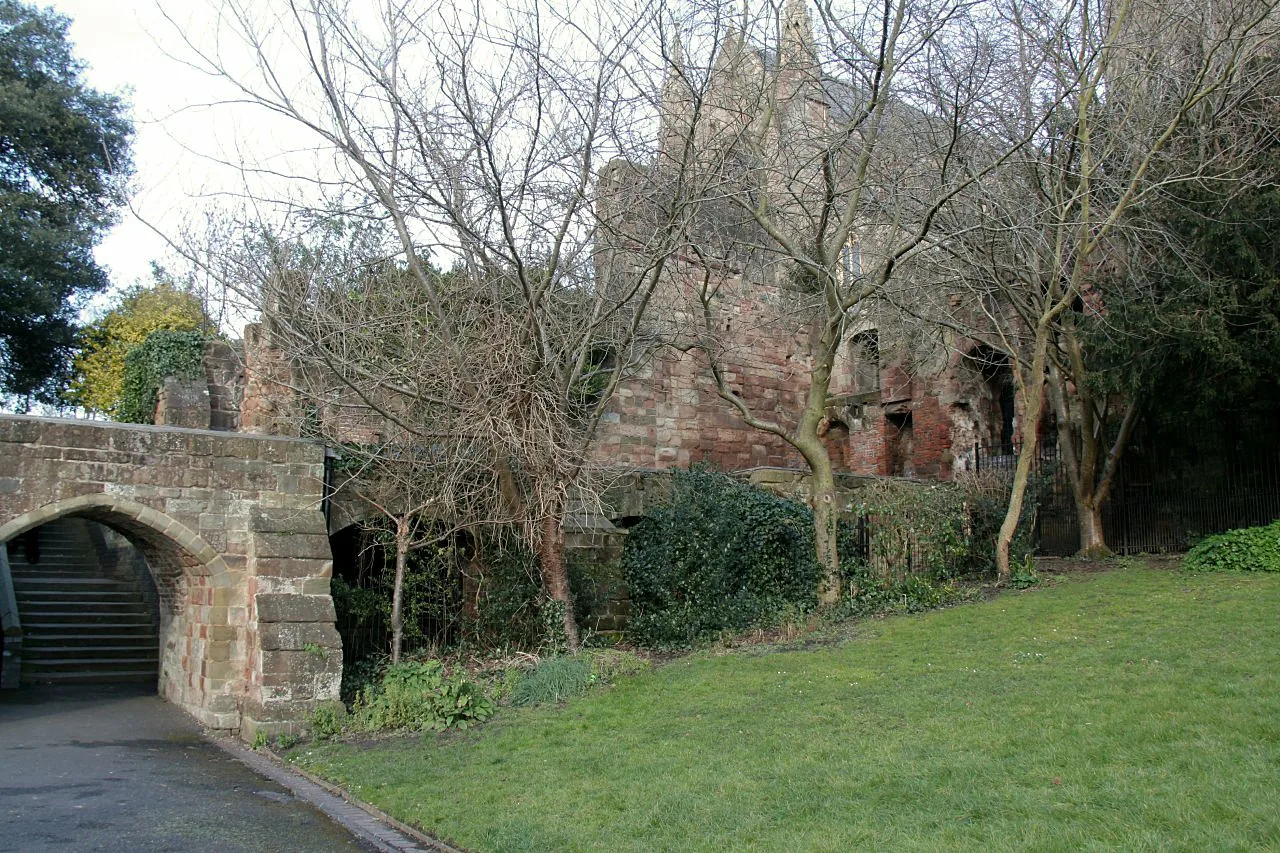
The yard sits at the east end of the cathedral, south of the Lady Chapel. It is squeezed between the cathedral and the ruins of the Guesten Hall, the medieval monastery’s guest hall.
The cathedral’s design and access statement says the buildings were designed in 1988 and put up in 1989. It describes the yard as “a crucial part of the maintenance and conservation of the cathedral ever since”.
There are two prefabricated metal sheds on a site of 222 square metres. They hold:
- an enclosed banker area, where masons work the stone
- an enclosed area for a fixed stone saw
- a works area for the cathedral’s services team
- storage
The sheds are not being changed. The statement says the roof can only be seen in full from the cathedral roof, which is not open to the public.
Why Historic England backed it
The yard sits inside the Worcester Cathedral scheduled monument, so Historic England was consulted. It said the yard has been in use for more than 36 years under repeatedly renewed temporary permissions.
It accepted that the sheds do some harm to the character of that part of the cathedral, but called the harm “low”. It said the yard “ensures the Cathedral can retain a highly skilled mason workforce in-house”. It added that it “helps preserve traditional conservation building skills, training and facilities within Worcester”.
Historic England also said the cathedral needs separate scheduled monument consent from it before the panels go up. Any trenching for cables will need that consent too, the city’s conservation officer said.
The solar panels
The cathedral’s heritage statement says the 22 panels would save about 1.4 tonnes of CO2 a year. The power would run the yard buildings and machinery, including the stone saw.
The panels are part of a wider carbon reduction programme at the cathedral. Historic England’s pre-application letter, filed with the plans, lists:
- an air source heat pump to the west of the yard
- a reorganised area for bins and skips
- “emerging proposals” for solar panels on other parts of the estate, “including some roofs of the Cathedral itself”
None of those other works is part of this permission. The council gave pre-application advice in March on two heat pumps, the yard panels and clearing trees to open up views of the cathedral’s south walls, the officer’s report shows.
The birch trees
The council’s tree officer raised one concern. A line of birch trees on the south side of the workshop could shade the panels. That “could result in future pressure to remove or heavily reduce the trees”, which the officer said would not be supported, because the trees screen the workshops.
The planning officer decided that, as the permission is temporary, the trees can be looked at again if the cathedral ever applies for a permanent building.
What it means for you
- Nothing changes on the ground for visitors. The sheds stay where they are, out of public view, and no public areas are affected.
- The cathedral’s own masons stay on site. Historic England’s case for the yard rests on keeping repair skills in-house in Worcester.
- Solar on the cathedral roof is not approved. It is only an emerging idea in Historic England’s letter. Any panels on the cathedral itself would need their own consents, and a planning application would appear on the city planning register. Our Worcester planning news page explains how to search it and comment.
- The next deadline is October 2031. By then the cathedral must remove the yard, renew the permission again, or apply for something permanent.
Sources
- Worcester City Council, planning application 26/00620/FUL and 26/00621/LB, decided 12 October 2026
- Worcester City Council, delegated decision report, including the Historic England, conservation and tree officer responses
- Worcester City Council, decision notice
- Clews Architects for the Dean and Chapter, design and access statement and heritage statement
Have your say