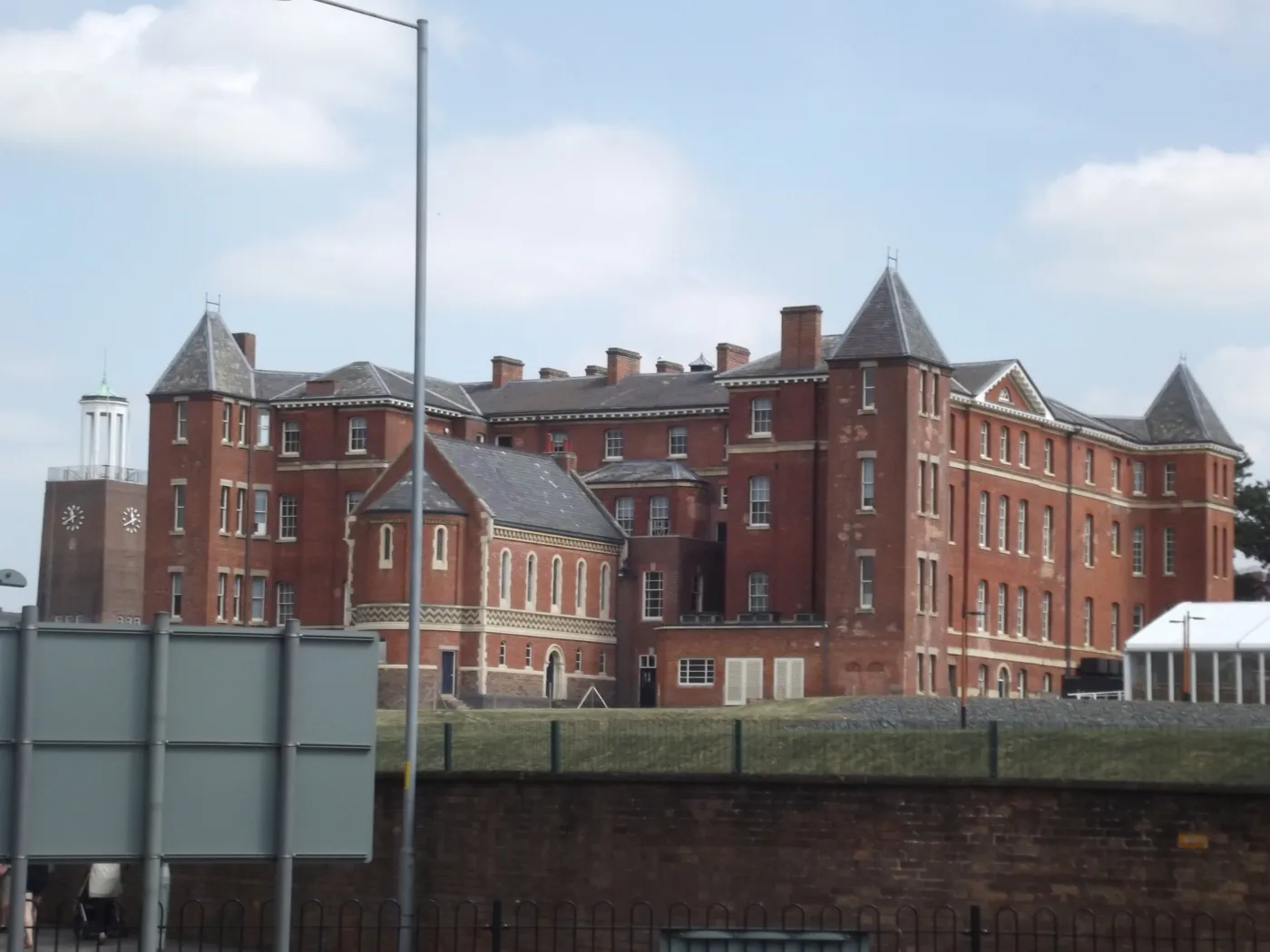

The University of Worcester is Daily Mail University Guide's University of the Year for Graduate Jobs 2027, announced on results day. What the government data behind it measures.
The University of Worcester has been named University of the Year for Graduate Jobs 2027 by the Daily Mail University Guide, with the guide’s editor saying the city’s record for getting graduates into high-skilled work “rivals the best in the country” and leaves “many of the Russell Group in the shade”. (University of Worcester, 13 August 2026)
The announcement landed on Thursday, the morning A-level results came out across Worcestershire, when tens of thousands of students were deciding where to spend the next three years.
What the judges said
Alastair McCall, editor of the Daily Mail University Guide, tied the award to sustained spending on the campus rather than to any single course.
“It has achieved this national success after a period of sustained and heavy investment in teaching and learning that is now paying dividends for its lucky students,” he said.
He added that prospective students weighing up whether a degree will pay off “would do well to consider Worcester”, and that the university’s focus on preparing students for work, its teaching facilities “and the data to prove that this is paying off” made “an unanswerable case”.
The data behind the claim
The award rests on a government statistic rather than a survey of opinion, which is worth understanding before the phrase “top for graduate jobs” gets repeated around the city.
The measure is Longitudinal Educational Outcomes, or LEO, published by the Department for Education. It works by linking education records to tax, benefits and further study records, so it counts what graduates are actually doing rather than what they say they are doing. The headline measure is the share of graduates in sustained employment, further study, or both, one year after finishing. “Sustained” has a precise meaning: paid work for at least one day in five of the six months from October to March. (Department for Education, LEO graduate outcomes provider level data)
On those figures, the university says it is the UK’s top multi-subject university for sustained employment, further study or both one year after graduation, and that across the ten years LEO has been an official statistic it ranks first among multi-subject universities overall. That ranking is the university’s own reading of the published data, and the qualifier matters: “multi-subject” excludes specialist institutions such as conservatoires and medical schools, which tend to sit at the top of employment tables because of what they teach.
What is not in dispute is the underlying point. This is a post-1992 university in a small cathedral city, competing on graduate employment with institutions that have far larger endowments and far older names.
What the city said
Councillor Lynn Denham, leader of Worcester City Council, called it “testament to the quality of teaching and education provided in our University, and further evidence of what a great place Worcester is to live, study, and start your career in”.
Sharon Smith, chief executive of Herefordshire and Worcestershire Chamber of Commerce, put the local business case: “Employers in this region value Worcester graduates because they leave with not only strong academic knowledge, but also the practical experience, professionalism and collaborative skills needed to succeed in the workplace.”
Simon Trickett, joint chief executive of the Herefordshire and Worcestershire Integrated Care Board, pointed to the NHS pipeline. “The local healthcare system is very reliant on the University of Worcester producing high quality graduates across a number of health and care disciplines,” he said, adding that the improvement over ten years had been “noticeable”.
Professor David Green CBE, the university’s vice chancellor and chief executive, credited staff and partner organisations. “We are all delighted that our graduates are so consistently successful in the workplace,” he said. “It just shows what we can do when we work together as a community.”
What it means for you
If you got your results today and are thinking about Clearing. The university has published a Clearing line, 01905 544 433, and the address study@worc.ac.uk. An award for graduate employment is a reasonable thing to weigh, but weigh it at subject level: LEO data is published by provider and by subject, and outcomes vary a great deal between courses at every university. The subject-level tables are free to search on the Department for Education site linked above.
If you employ people in Worcester. The chamber of commerce’s point cuts both ways. A university that is genuinely first in the country on sustained employment is a local recruitment asset, and the health and care courses in particular feed directly into the county’s hospitals and care providers.
If you live here and do not have a student in the house. The university is a large local employer, and it is half the reason The Hive on the riverside works as it does, a university library that is also the city’s public library and open to anyone in Worcester. National recognition of this kind tends to show up later in applications, student numbers and the money that follows them into the city.
The Daily Mail University Guide is one of several national guides, alongside the Complete University Guide and the Guardian, and each weights different things. This award is specifically about what graduates go on to do, not about entry grades, research or student satisfaction.
For more about the city itself, see things to do in Worcester and our guide to Worcester house prices, which is the figure most graduates staying in the city ask about first.
Have your say